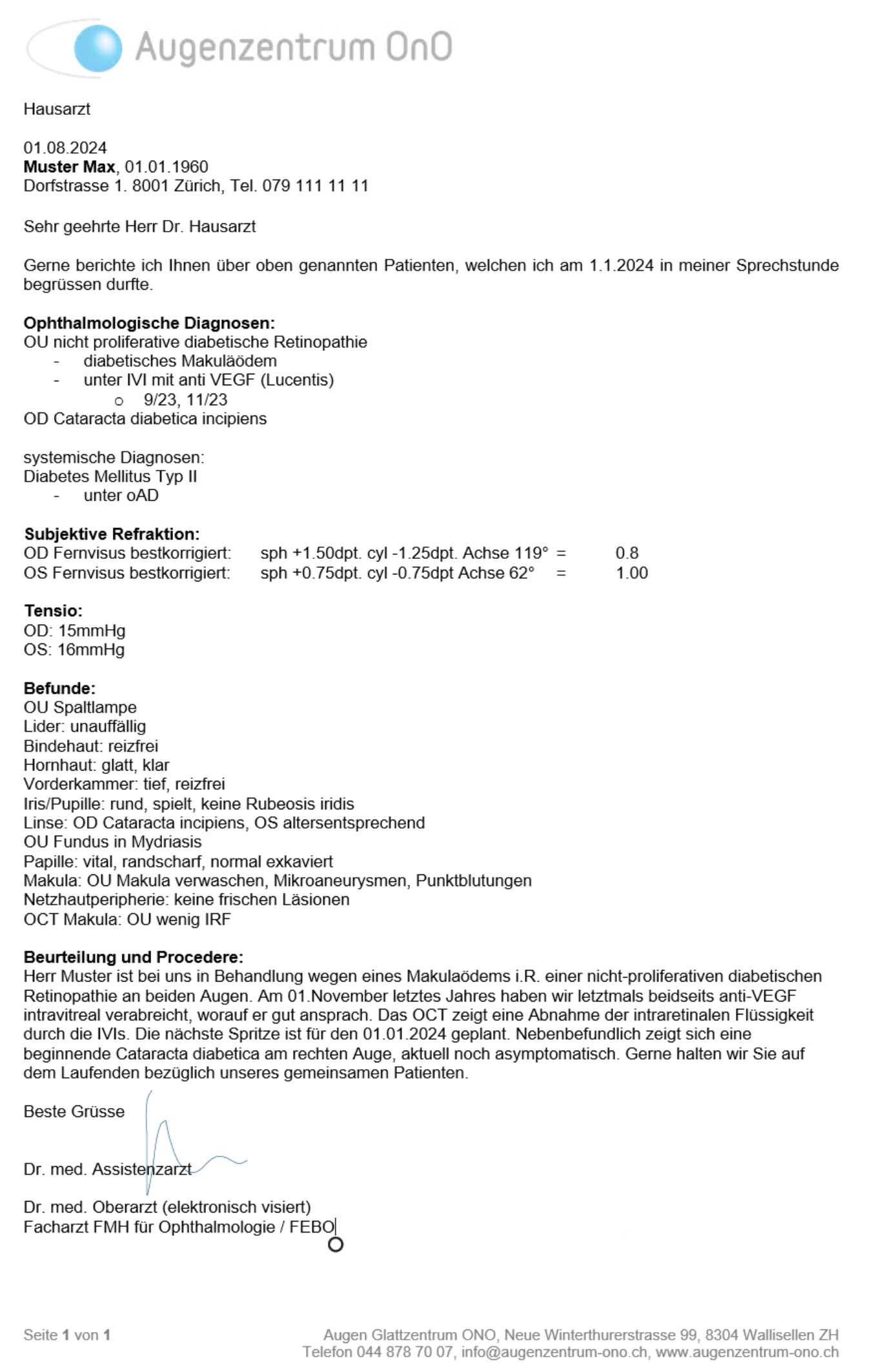
Systemic diagnoses (only if related to the ophthalmological diagnoses)
Distance visual acuity (automatically populated)
IOP (automatically populated)
Findings (automatically populated)
Assessment and plan -> adjust in Hexabit Luna (automatically populated)
Signature of the treating physician
Responsible Ophthalmic Surgery Fellow/attending physician (signed off electronically, does not need to sign by hand)
General practitioner report for a patient with diabetes
Assessment and Plan
The assessment is written epicritically, i.e. the findings and pathologies from the examinations are summarized and a conclusion is drawn from them in the form of a diagnosis or working hypothesis. Different possible treatments are weighed against each other, with reasoning given for the one chosen.
How to Write a Report in Hexabit Luna
Reports -> search/insert recipient -> "formal report" -> a Word file opens
Check diagnoses and findings, adjust the assessment and plan
Add the Ophthalmic Surgery Fellow or attending physician (sign-off by a specialist is required)
When Must a Report Be Created?
Create and draft the report on the day of examination -> assign the task in Hexabit Luna to the responsible specialist
The responsible specialist corrects the report, signs it, and forwards it to the front office for dispatch
Specialist -> note/addendum in the medical record: report created, billed (non-formalized report TarMED code: 00.2285)
Front office: -> report sent via email/post
Who Is Responsible for Writing a Given Report?
Reports should be written and sent with as little delay as possible.
The physician responsible is the one who examined the patient at the time the report is requested. This prevents reports from being passed on to other physicians and causing delays. No report should take longer than one week. If the responsible physician is absent, the report must be handed over to the covering physician.
If the documentation in the medical record does not provide sufficient information for a report, this must be forwarded to the responsible specialist or chief physician.
You might also be interested in this
General
Overview of the structure, function and diseases of the eye
The most important sensory organ in humans accounts for 70-80% of all sensory impressions. Vision requirements and demands are constantly increasing.
General
Side effect of medication on the eye
Various active ingredients of drugs can cause eye side effects. If you feel that a medication is harming your eyes, it makes sense to see an ophthalmologist
General
Low vision - visual aids
Simple tricks and aids can make the lives of visually impaired people worth living again