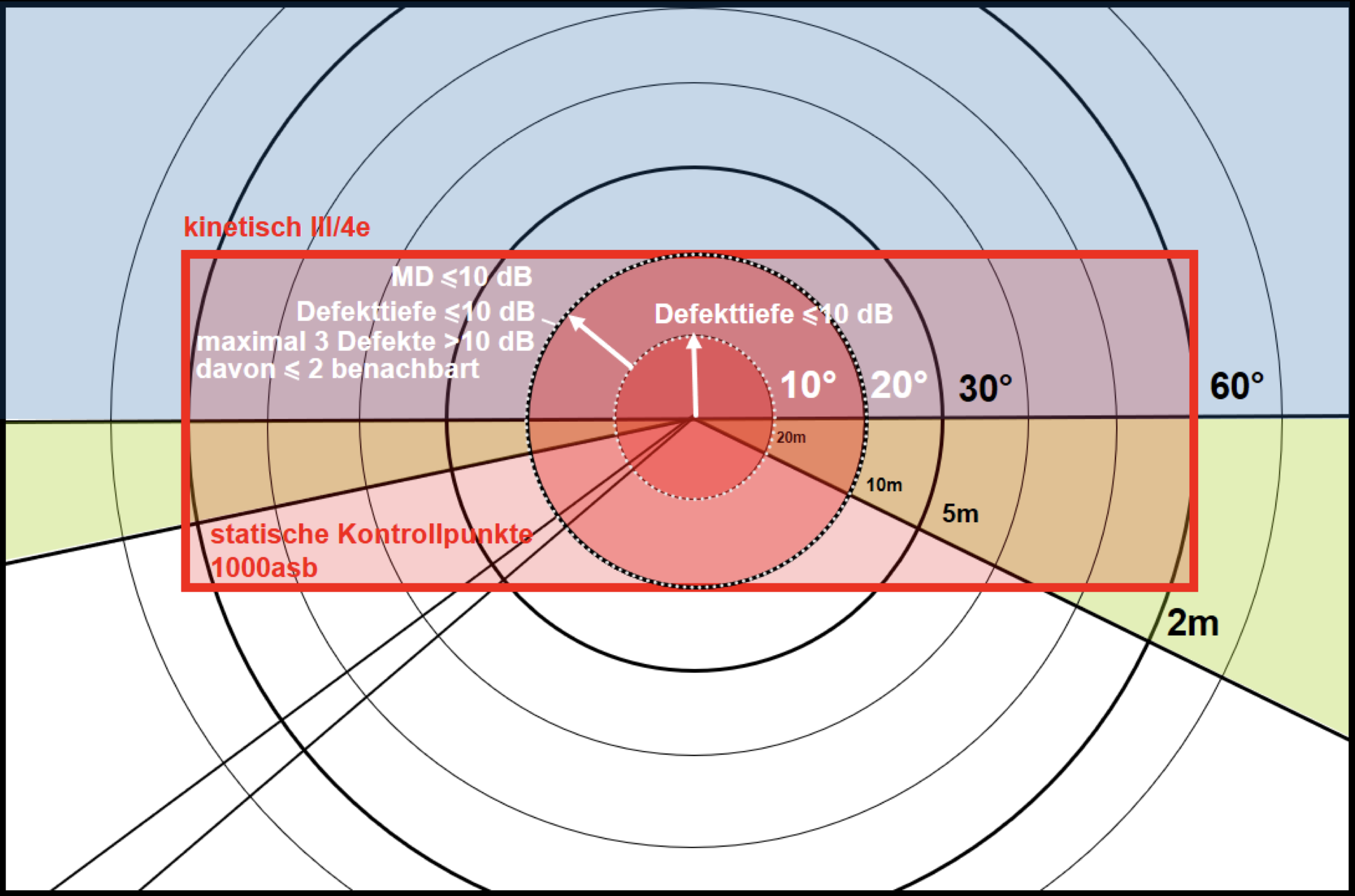
Apparatus examination of the external borders of the visual field (kinetic )
Ophthalmic examination of anterior and posterior eye sections
If restrictions are suspected
Apparatus examination of the central visual field (glaucoma programme) only for
Existing glaucoma
Retinal atrophies (AMD with GA)
Apparatus examination of twilight and contrast vision, with
anamnestic abnormality
Driving license categories
1st group
Category A and B
Subcategories A1 and B1
Special categories F, G and M
Subcategories D1, if limited to 3.5 t
2nd group
Category C and D
Subcategories C1 and D1
Professional passenger transport permit BPT
Traffic experts
Deviation from minimum medical requirements -> doctor level 4
Driving license with restrictions (e.g. rayon) -> doctor level 4
Medical reporting law in case of suspicion of lack of fitness to drive (without violation of medical professional secrecy)
Medical education obligation
minimum requirements
UCVA/BCVA
Lighting and distance from the visual board must be standardized
Reading speed should be 1 visual sign per second
Visual acuity level is considered met when 60% of a line is correctly recognized (3/5)
1st group:
better eye 0.5, worse eye 0.2
better eye 0.6, worse eye < 0.2
2nd group:
better eye 0.9
Bad eye 0.5
visual field
Monocular visual field test using a confrontation method
without suspicion of restriction
Monocular visual field test
Noticeable when using the confrontational method
Previously known diseases (eye diseases, visual field defects)
Suspicion of possible visual field defects due to traffic history (e.g. accident)
Method (TOP strategy unsuitable)
kinetic perimetry (Goldmann III/4e at 5° per second or automatic) to check external borders
static perimetry (glaucoma G2) for central 20° (1st group) 30° (2nd group)
Invalid if
Fixation rate > 15%
False-negative > 30%
1st group
MD (medium defect) </= 10 dB (better eye is essential)
Central 10° anywhere >/= 10 dB
Central 10-20° maximum 3 defects < 10 dB of which a maximum of 2 adjacent
2nd group (same as 1st group) only:
Central 10-30° maximum 3 defects < 10 dB of which a maximum of 2 adjacent
Peripheral field of vision
1st group: horizontal 120°, extension to the right and left 50°, up and down 20°
2nd group: horizontal 140°, extension to the right and left 80°, up and down 30°
Central field of vision
1st group: up to 20° normal (binocular)
2nd group: up to 20° normal (monocular, with both eyes) -> no binocular compensation
eye movement/double vision
Must be actively enquired, in case of suspicion -> ophthalmological examination
1st group: no restrictive double vision
2nd group: normal eye mobility, no double vision
Dual image-free viewing area with straight head position (maximum 10° deviation)
1st group: binocular central dual image-free use field of view of 20°
2nd group: Double images are only allowed in extreme positions. Exceptions for content (not new entrants) double image-free field of view of 25° view, 40° view, 30° sideways view
Twilight vision and sensitivity to glare (group 1 = 2)
no significant restriction of twilight vision
no significantly increased glare sensitivity
In case of suspicion -> equipment test
group 1:1:23
Group 2 (excluding D, D1): 1:5
Categories D, D1:1:2.7
Special aspects
Emerging one-eye (bad eye < 0.2) -> 4 months driving leave -> then inspection trip with traffic experts
new double vision -> waiting period of 3 months
stereo vision/color vision -> no criterion
Requirements for pilots and air traffic controllers (ATCO, Air Traffic Controller)
Class 1 (commercial, aircraft and helicopter)
Ophthalmic examination during selection (BAZL-licensed ophthalmologist)
General medical examination including eye test (Swiss flight station or Dübendorf aviation medical institute)
If requirements are not met -> ophthalmological examination (BAZL licensed ophthalmologist)
requisitions
Best corrected remote vision binocular 1.0 (no requirement for uncorrected visual acuity)
Worse eye 0.7
ametropia
Sphere: -6.0 to +5.0 diopters
Astigmatism: 2 diopters (ATCO 3 diopters)
Anisometropy: 2 diopters (ATCO 3 diopters)
heterophoria
far
Vertical 2 diopters
Eso 10 diopters
Exo 8 diopters
close
Vertical 1 Doptrie
Eso 8 Diopter
Exo 12 Diopter
binocular vision: normal
Field of view: no defects (e.g. Octopus G2)
Colour: 26 plates
Specials
Keratoconus: Evaluation by BAZL ophthalmologist Dr. Roy in Geneva)
cataract surgery: flight abstinence for 1-3 months -> then evaluation by BAZL ophthalmologist)
retinal surgery: flight abstinence 6 months -> then evaluation by BAZL ophthalmologist)
Vision aids, eye surgery and implants
Permitted
Phake IOLs (e.g. monofocal ICLs)
Monofocal IOLs (no multifocal or EDOF IOLs)
contact lenses (monofocal, uncoloured, no monovision, no orthokeratocontact lenses)
Class 2 (non-commercial private pilots, powered aircraft or helicopters)
Medical examination including eye test by flight doctor
If requirements are not met -> ophthalmological examination (BAZL licensed ophthalmologist)
requisitions
Best corrected remote vision binocular 0.7 (no requirement for uncorrected visual acuity)
Worse eye 0.5
Flight test mandatory for amblyopia </= 0.3, besseres Auge 1.0 ->
EASA rules (European Union Aviation Safety Agency) Last update Air Crew 2019 and Air Traffic Controller (ATCO 2025)
Summary by Dr. Eliska Nagel BAZL-licensed ophthalmologist (referrals to nagel@augenzentrum-ono.ch
You might also be interested in this
General
Overview of the structure, function and diseases of the eye
The most important sensory organ in humans accounts for 70-80% of all sensory impressions. Vision requirements and demands are constantly increasing.
General
Side effect of medication on the eye
Various active ingredients of drugs can cause eye side effects. If you feel that a medication is harming your eyes, it makes sense to see an ophthalmologist
General
Low vision - visual aids
Simple tricks and aids can make the lives of visually impaired people worth living again