Correct billing is important for patients, doctors, health insurance companies and the future of medical care in Switzerland
Dr. Valery Vinzent Wittwer
Fundamentals
Any medical action must be able to be justified before the patient and the health insurer
Only a targeted investigation enables cost efficiency
Only what was actually carried out is billed
Only what is necessary is carried out or billed
Making a diagnosis
Exclude differential diagnoses
Legal protection for the examiner (medico-legal aspect)
ONO billing blocks
To simplify and reduce wasted time
Fewer TARMED positions are lost
Blocks are designed in such a way that as many suitable and combinable positions as possible are included
must be adjusted in each case
What is included in an ophthalmological examination?
An ophthalmological examination is a legal act, i.e. the examining doctor must act to the best of his knowledge and belief and in the interests of the patient's health. This includes a minimum of measurements and tests.
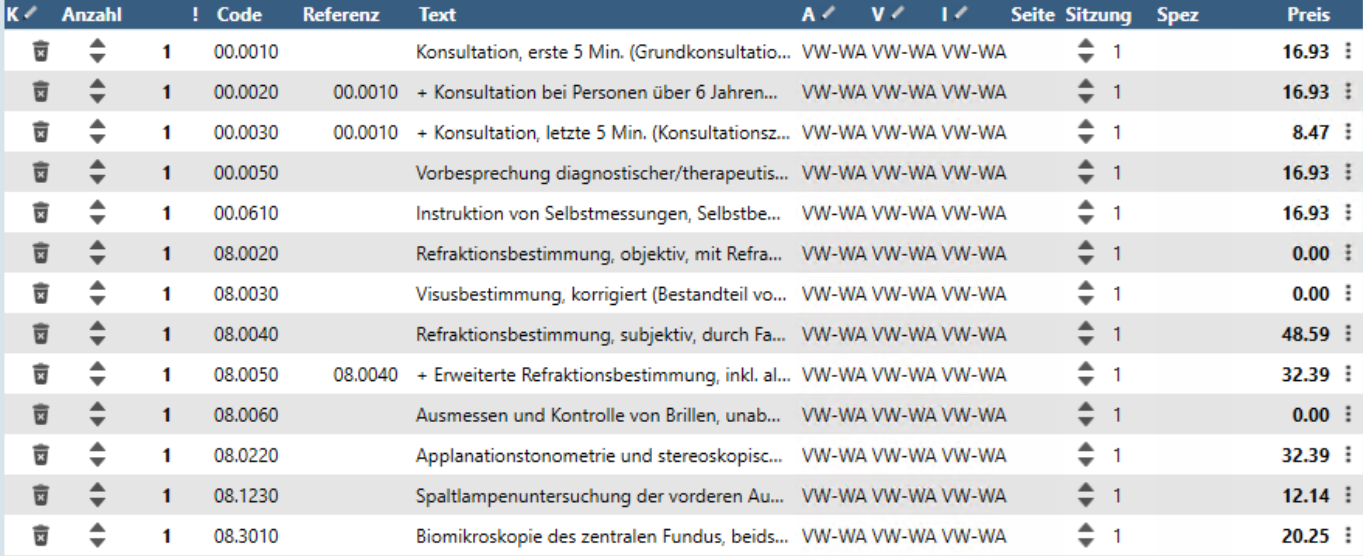
00.0010 Consultation, first 5 min
00.0020 + Consultation for people over 6 years of age and under 75 years
08.0220 Applanation tonometry and stereoscopic papillary assessment
08.1230 Slit lamp examination of anterior eye sections, on both sides
08.3010 Biomicroscopy of the central fundus, two-sided
K2 (standard control)
Additional research
Visus
08.0050 Advanced refraction determination, including any eyeglass ordination (for more precise subj. visual acuity assessment even if a prescription for glasses is not given)
08.0140 Examination with the Amsler network, per side (for abnormalities on the macula, always on both sides for side comparison and treatment for the patient)
08.0090 Test of binocular vision by a specialist (stereo test+ 3 more tests, e.g. Maddox, Worth, Wing)
Discussion with patients and reports
00.0050 Preliminary diagnosis /therap. Interventions (max. 12x per case)
00.0055 < 6 Jahre > 75 years (will be adapted by software)
00.0610 Instructions for self-measurements/treatments (max. 3x per session, 6x per 3 months)
< 6 Jahre oder >00.0615 75 years
00.2285 Unformalized report 11 to 35 lines (normal report e.g. to other doctors)
0.2295 Each additional 35 lines
00.2205 Formalised doctor's report (e.g. filling out a form for health insurance)
00.0141 File study in the patient's absence per minute (not related to the preparation of a report) (max. 30x per 3 months)
00.0132 < 6 Jahre oder > 75 years (max. 60x per 3 months)
Report billing block
Teleconsultation billing block
Cornea examination
08.0610 Schirmer test and/or fluorescein permeability test (even when measuring break-up time)
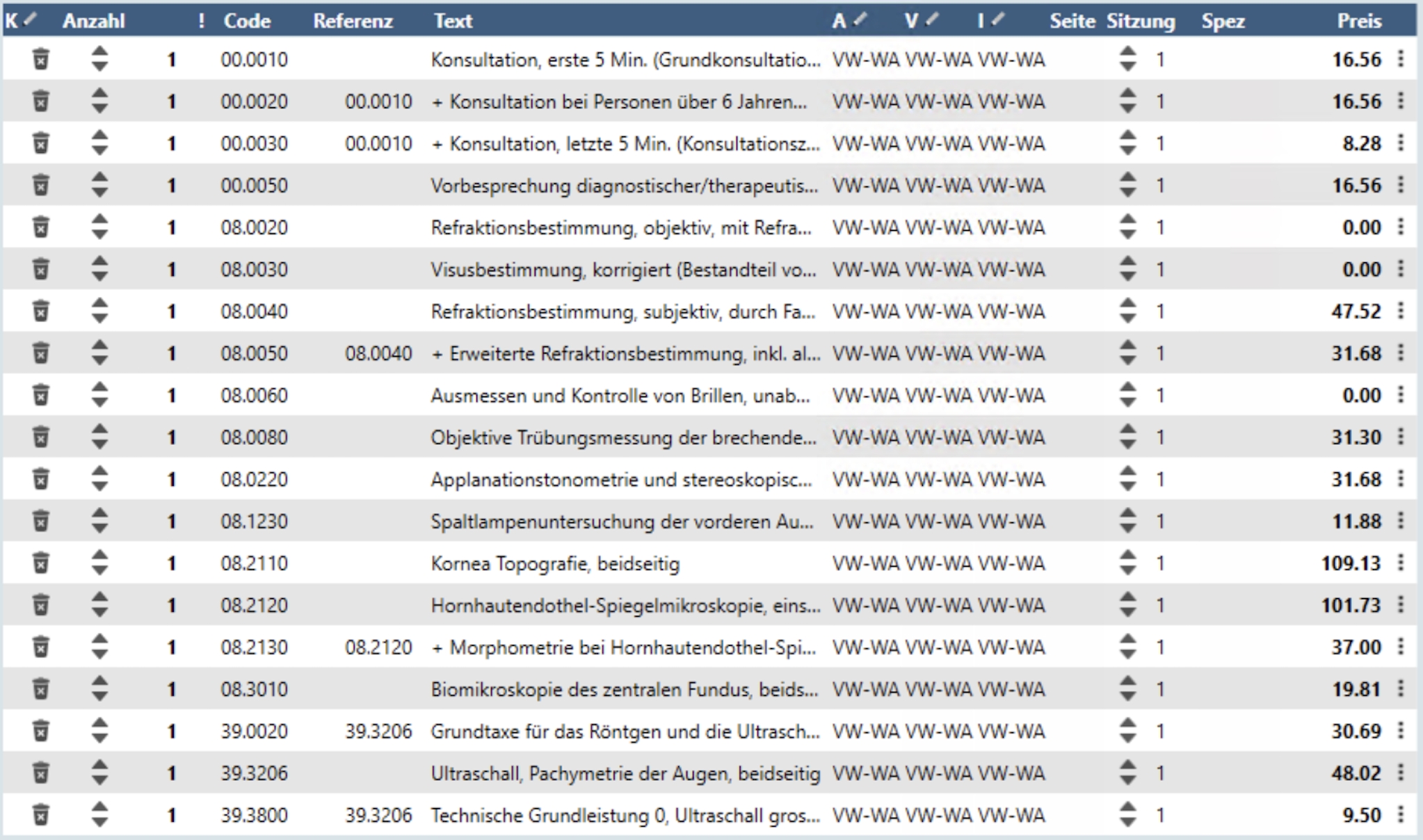
08.2110 Cornea topography, on both sides (Pentacam)
39.3206 + 39.0020 + 39.3800 Ultrasound pachymetry (also when measuring pachymetry using Pentacam)
08.2120 + 08.2130 Corneal endothelium mirror microscopy + morphometry (counting and evaluating the shape of endothelial cells)
08.1210 Irritating hair anesthesiometry (measurement of corneal sensitivity, e.g. when herpes is suspected)
08.1410 Initial adjustment of a therapeutic bandage or contact lens for non-refractive indications, per page
Cornea billing block
lacrimal gland, lacrimal ducts
08.0610 Schirmer test and/or fluorescein permeability test (even when measuring break-up time)
08.0640 Lacrimal flushing, on both sides
08.0670 Tear path probing, on both sides
Cataract examination and myopia control
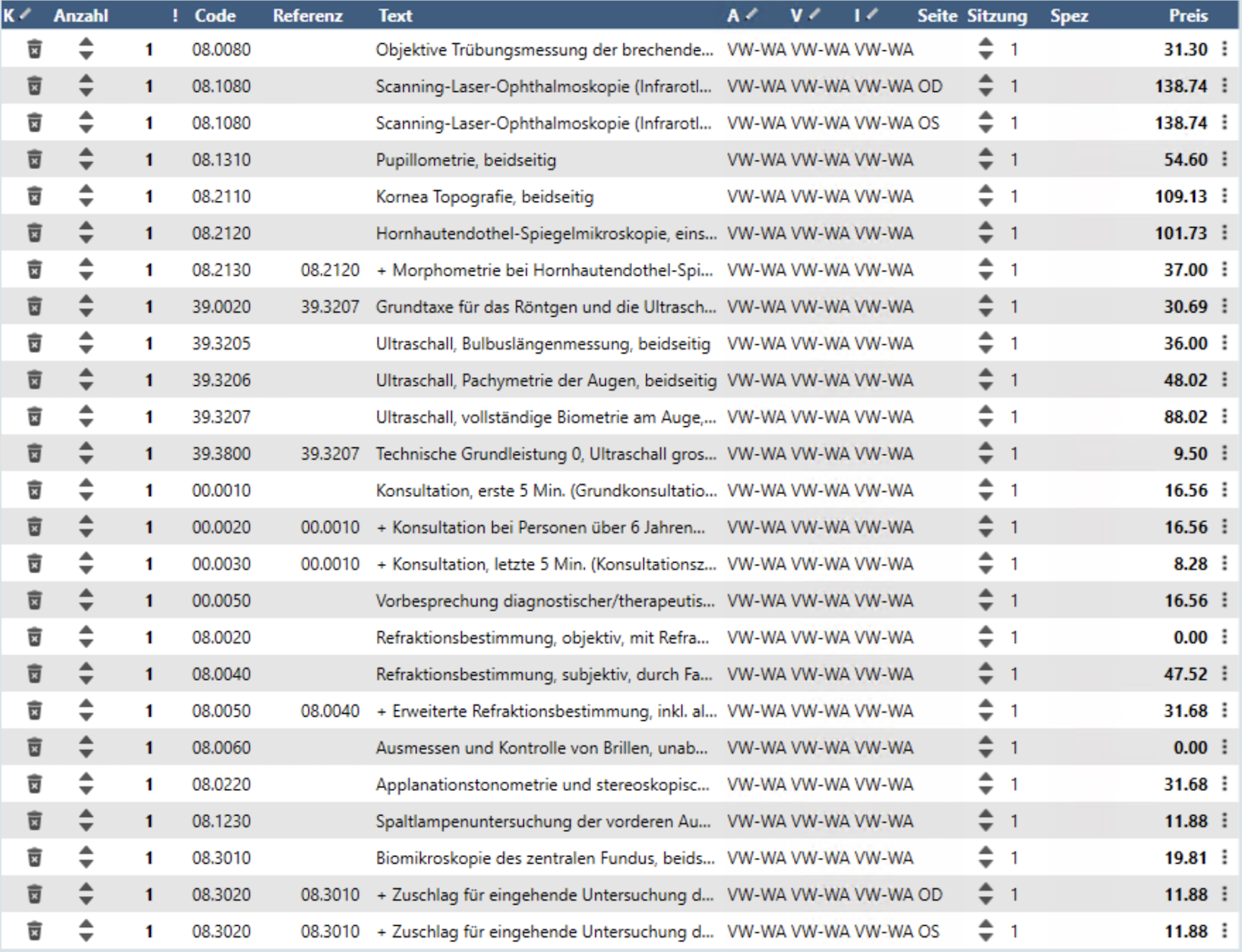
39.3207 Ultrasound, complete biometry of the eye (including for myopia control)
08.0080 Objective turbidity measurement of refractive media, summary, on both sides
08.0100 Contrast sensitivity test, double-sided
08.1310 Pupillometry, bilateral (scotopic, photopic for evaluation before implantation multifocal IOLs)
08.1330 Determination of sensitivity to glare, on both sides (in case of cataract < 50 years for cost credit)
Accounting blocks for preliminary examination of cataract surgery SK1 + VC
glaucoma
08.0230 Eye pressure day curve, on both sides (applanation tonometry 3x/d)
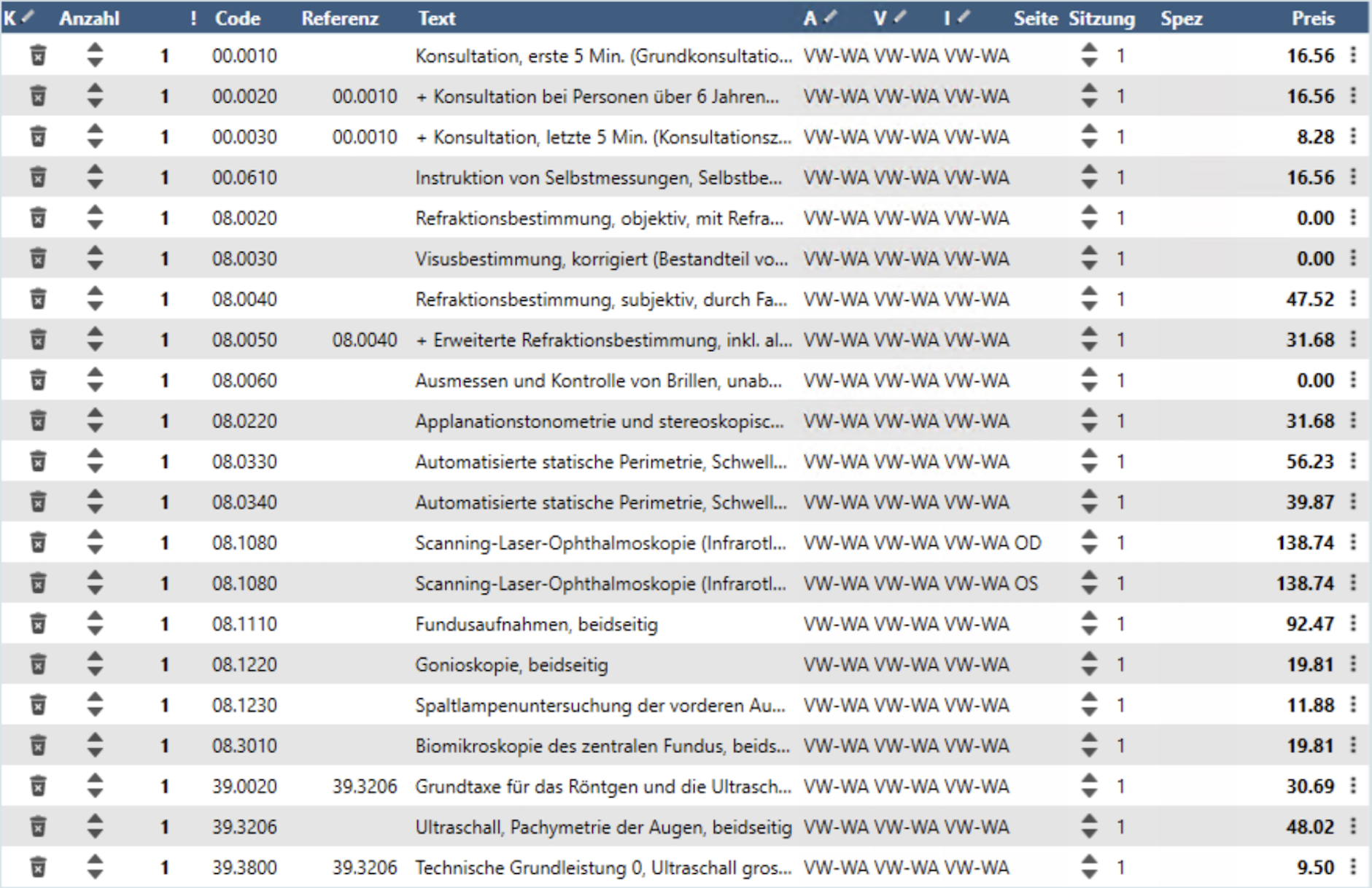
08.1220 Gonioscopy (max. 1x per session)
08.0330 Automatic static perimetry first eye, 55 points
08.0340 each additional program with 55 points
39.3206 + 39.0020 + 39.3800 Ultrasound pachymetry (also when measuring pachymetry using Pentacam)
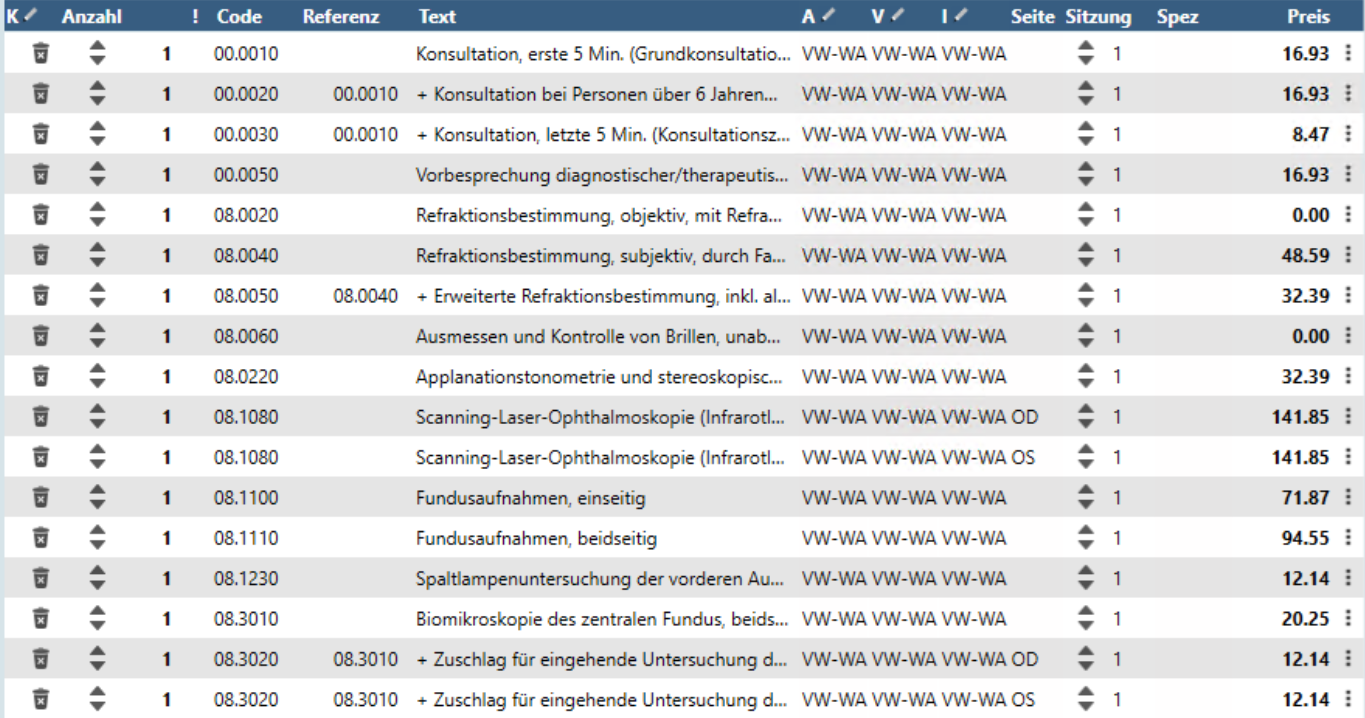
08.1080 Scanning laser ophthalmoscopy (OCT) per page (billing only if glaucoma defect and progression is present)
08.1110 Fundus images on both sides (if there is no progression)
08.1100 Fundus image on one side ((if there is no progression)
Glaucoma billing block
retinal
Examination with the Amsler test, per page (in case of abnormal macula biomicroscopy, always on both sides for side comparison
+ 00.0610/00.0615 when instructed to measure yourself
08.3020 Supplement for detailed examination of fundus periphery (also without mydriasis)
08.1080 Laser Ophthalmoscopy (OCT) scanning per page (only for maculopathy to evaluate intervention)
08.1110 Bilateral fundus images (for DM, AMD, to document druze, atherosclerotic or hypertensive retinopathy)
08.1100 One-sided fundus recording (e.g. documentation of nevus)
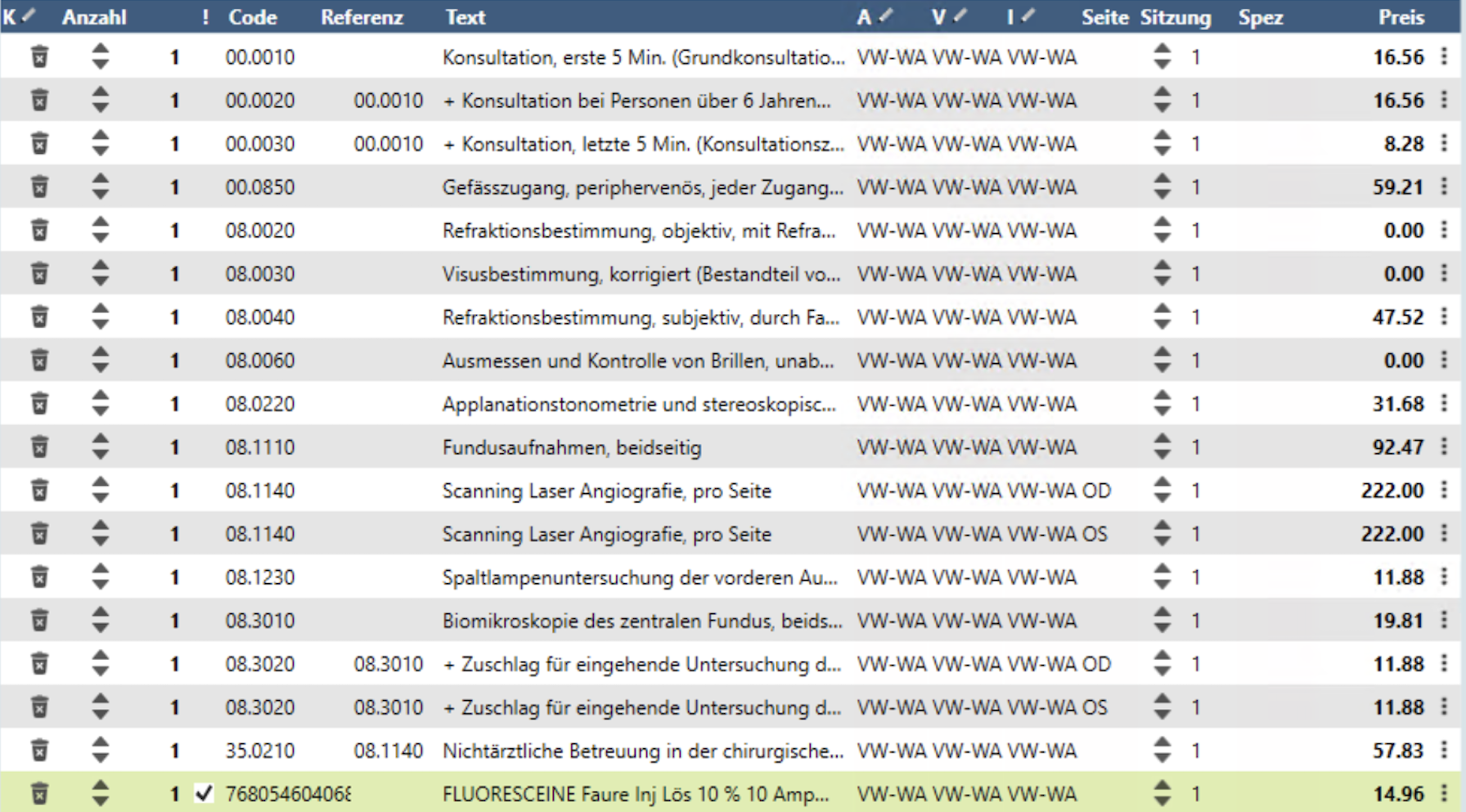
08.1060 Fluorescence angiography, per page (always on both sides, in case of Vd. a. CNV, retinal ischemia)
08.3040 Short laser coagulation on the eyes, up to 50 effects (e.g. small foramen)
08.3050 Prolonged laser coagulation on the eyes, more than 50 effects (e.g. retinal tear)
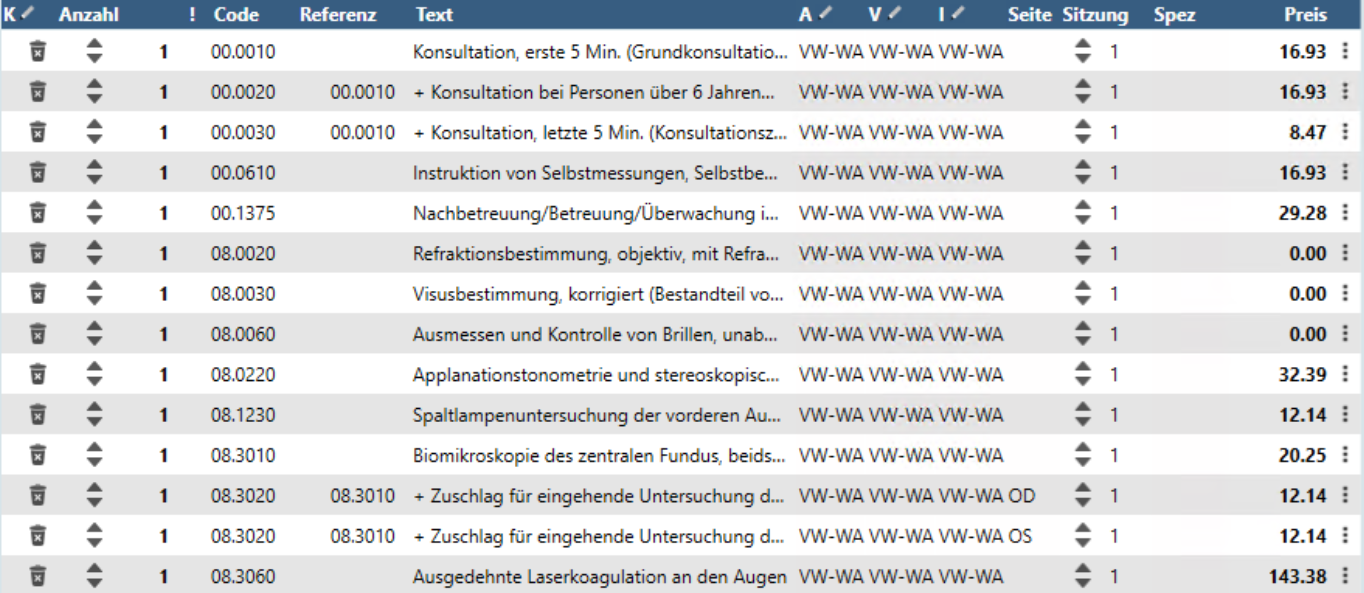
08.3060 Extensive laser coagulation in the eyes (e.g. panretinal ALK in case of venous occlusion or diabetic retinopathy)
K3 retina
Ultrasound of the bulb
Fluorescence angiography billing block
Argon diabetes (pan ALK)
Führerprüfung
08.0310 Manual kinetic perimetry
Foreign body removal
08.1240 Supplement for a small surgical treatment on the slit lamp
08.2150 Removing foreign bodies from cornea, possibly with drilling the grate
YAG capsulotomy
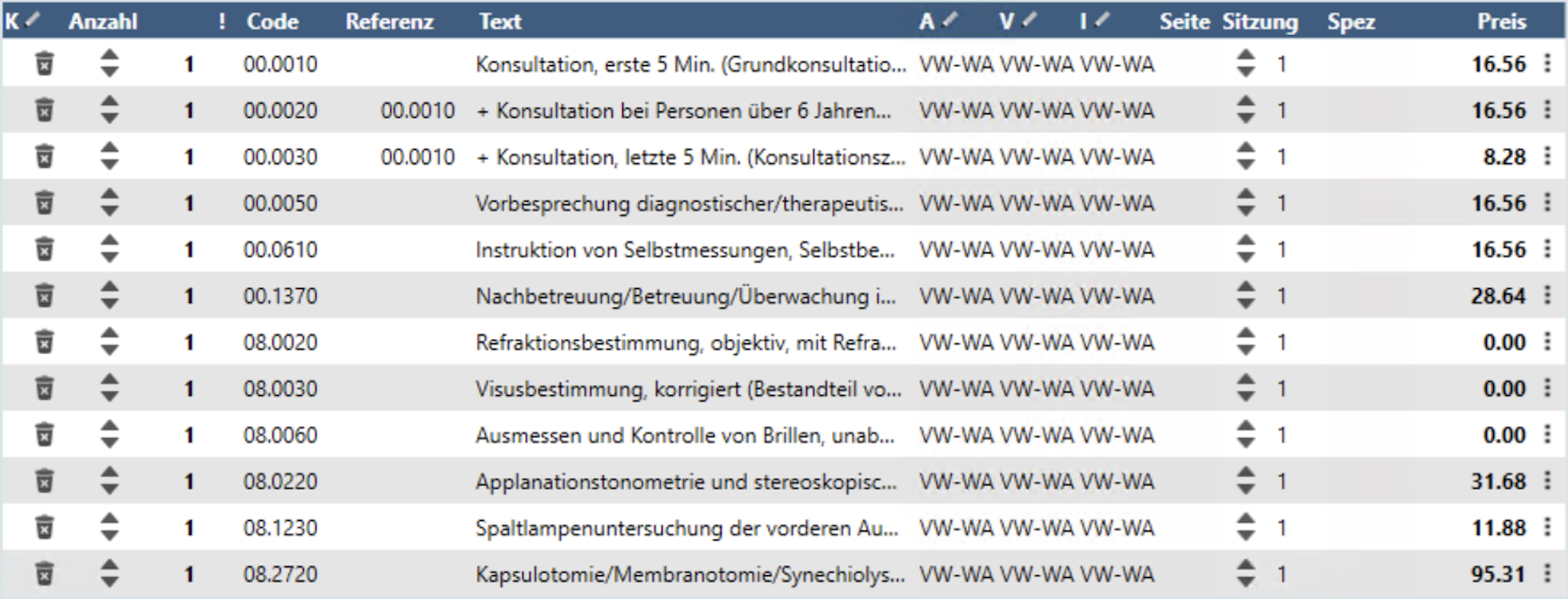
08.2720 Capsulotomy/synechilysis with the laser
Limitation
cannot be combined with an incoming fundus copy
Only 1x per session
YAG capsulotomy billing block
chemical burn
08.0840 Irrigation of the conjunctival sac in case of a chemical burn, per eye
Blubus thread removal
08.2360 Removal of a keratoplasic suture or other prominent sutures on the bulb
08.1240 Supplement for a small surgical treatment on the slit lamp
Hertel test
08.1250 Exophthalmometry, bilateral
Color vision test
08.0520 Color vision test medium (Farnsworth 15)
Rinse in case of chemical burn
08.0840 Irrigation of the conjunctival sac in case of a chemical burn, per eye
Neuro-ophthalmic status
08.0490 Neuroophthalmological status (cranial nerves III-VII cursory, gaze motor skills, nystagmus examination)
08.0420 Orthoptic progress control/partial status (ONO short check in vision school)
08.0500 Therapeutic orthoptics, per 5 minutes
You might also be interested in this
General
Overview of the structure, function and diseases of the eye
The most important sensory organ in humans accounts for 70-80% of all sensory impressions. Vision requirements and demands are constantly increasing.
General
Side effect of medication on the eye
Various active ingredients of drugs can cause eye side effects. If you feel that a medication is harming your eyes, it makes sense to see an ophthalmologist
General
Low vision - visual aids
Simple tricks and aids can make the lives of visually impaired people worth living again